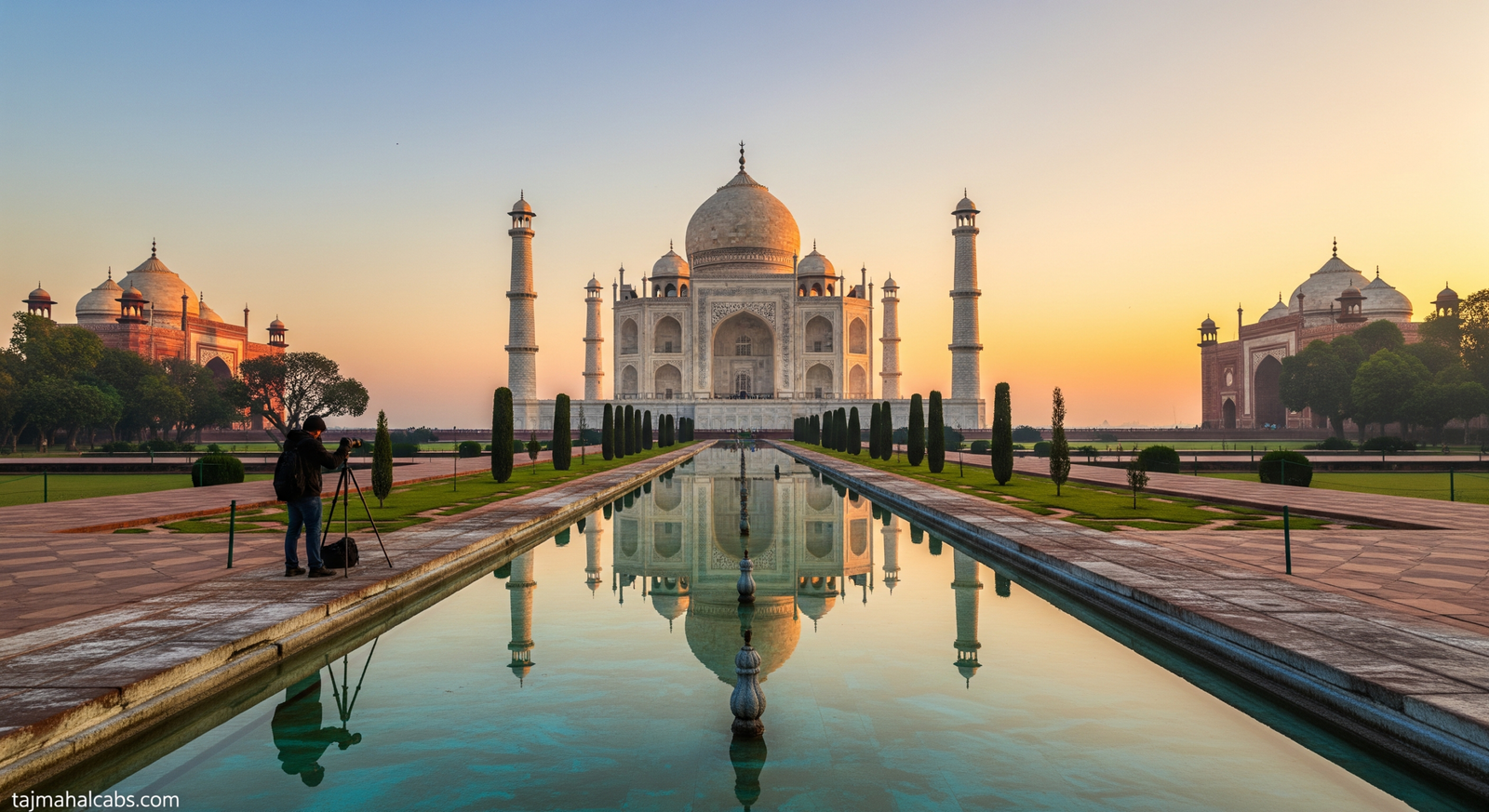
Taj Mahal Sunrise Photography Rules: Complete Guide for Visitors
Learn the official rules, photography tips, best spots, and timing for capturing stunning sunrise photos at the Taj Mahal.
Capturing the Taj Mahal at sunrise is a dream for many photographers and travelers alike. The soft golden light, reflections in the water channels, and serene atmosphere make it one of the most photographed monuments in the world. However, there are specific rules and best practices you should follow to make the most of your sunrise photography session without any hassle.
This guide will walk you through official photography rules, tips, and the best locations to photograph the Taj Mahal at sunrise.
Follow the official Taj Mahal sunrise photography rules. Learn timing, best spots, camera tips, and how to capture stunning sunrise photos.
Quick Answer: Taj Mahal Sunrise Photography Rules
- Arrive early: 15–30 minutes before sunrise.
- Tripods: Usually allowed with prior permission; check security rules.
- Flash: Not recommended inside mausoleum areas.
- Drone photography: Prohibited without government approval.
- Respect visitors and staff: Avoid blocking pathways and gates.
Following these rules ensures a smooth experience and lets you focus on capturing stunning images.
Official Taj Mahal Photography Rules
- Tripods and Monopods:
- Tripods are generally allowed outside the main mausoleum. For inside shots, you may need prior permission or special photography passes.
- Drones:
- Strictly prohibited across the Taj Mahal complex. Violating this rule can result in fines or confiscation.
- Professional Equipment:
- Professional cameras are allowed, but additional lighting equipment may require prior approval.
- Flash Photography:
- Inside the mausoleum, flash photography is not permitted to protect the marble.
- Respect Queue & Rules:
- Avoid blocking pathways, obstructing other visitors, or standing on restricted areas.
For a step-by-step guide to timing and entry, check our Taj Mahal Sunrise Guide.

Best Camera Settings for Sunrise Photography
- Aperture: f/8–f/11 for sharp landscape shots.
- ISO: Keep low (100–200) to avoid noise.
- Shutter Speed: Adjust based on light; use tripod for long exposures.
- White Balance: Set to “Daylight” or “Cloudy” to capture warm sunrise tones.
- Focus: Use manual or single-point autofocus on main monument.
Photography conditions improve greatly when you arrive at the ideal sunrise entry time.
Best Spots for Sunrise Photography
- Main Gate View: Iconic symmetrical shots with water reflection pools.
- East Gate Approach: Less crowded, soft morning light.
- Side Gardens: Creative angles with flowers and pathways framing the monument.
- Yamuna River Viewpoint: Unique perspective from across the river.
Do’s and Don’ts for Sunrise Photography
Do’s:
- Arrive early for fewer crowds and better light.
- Carry a lightweight tripod for stability.
- Respect security rules and signs.
- Plan multiple angles for variety.
Don’ts:
- Do not use drones.
- Avoid blocking visitors or pathways.
- Do not use flash inside the mausoleum.
- Avoid heavy lighting equipment unless pre-approved.
Timing Tips for Perfect Shots
- Arrive at least 30 minutes before sunrise to clear security.
- Capture the golden hour light on the marble’s surface.
- Use reflections in the water channels for symmetry and depth.
- Monitor seasonal differences; fog may affect winter shots (Dec–Jan).
For hassle-free early morning photography, consider a private sunrise Taj Mahal tour from Delhi which includes early pickup, gate access, and guided entry.
Photography Etiquette
- Be mindful of other visitors.
- Avoid stepping on flower beds or restricted areas.
- Keep tripods and bags out of main walking paths.
- Follow staff instructions during high-traffic hours.
Useful Links
- Check Best Time to Enter Taj Mahal at Sunrise for timing and gate advice.
- Learn detailed sunrise photography tips at the Taj Mahal for composition and lighting ideas.
Frequently Asked Questions
Q1: Are tripods allowed inside the Taj Mahal?
- Usually only outside the main mausoleum; inside requires permission.
Q2: Can I use my smartphone for sunrise shots?
- Yes, smartphones work well, especially with HDR mode and wide-angle lenses.
Q3: What’s the best time to capture reflections?
- First 30 minutes after sunrise offers calm water and minimal crowd disturbance.
Q4: Can I hire a photography guide?
- Yes, many tours specialize in sunrise photography sessions, which can help you get the best shots.
Final Thoughts
Capturing the Taj Mahal at sunrise is a magical experience, but following official photography rules, timing, and etiquette ensures a smooth visit and stunning photos. With the right preparation, camera settings, and early arrival, you can make the most of the soft morning light and peaceful atmosphere.
For a fully guided, hassle-free experience, a private sunrise Taj Mahal tour from Delhi is highly recommended.
.
For Booking & Inquiry
Our tour expert always ready to help you
.
.
.
.
Noted:- For e-visa applicants: You must apply for e-visa, 4 days prior of your date of arrival in India.
For more information visit: https://indianvisaonline.gov.in/visa/index.html
Other Popular Agra & Golden Triangle Tours

Taj Mahal Private Guided Tours

Sunrise Taj Mahal Guided Tours

Taj Mahal Train Tours

Taj Mahal Tour by Car

Taj Mahal Overnight Tours

Delhi Agra Off-beat Tours

Delhi City Tours India

Delhi Agra Tours with Hotel Stay

Delhi to Jaipur Guided Tours

Popular Golden Triangle Tours

To/From Taj Mahal Transfer Deals
.

.
.
Looking for a customized trip?
Our tour expert always ready to help you plan your next unique trip.
.
.
.
.
👨💼for Booking & Inquiry Please Call / Whatsapp to +91 7500-840-840
✍️ Author
Written by Alamgir Khan, Agra-based tour expert and founder of Taj Mahal Cabs, helping travelers from around the world experience India’s most iconic monument with comfort, care, and authenticity.
You must be logged in to post a comment.