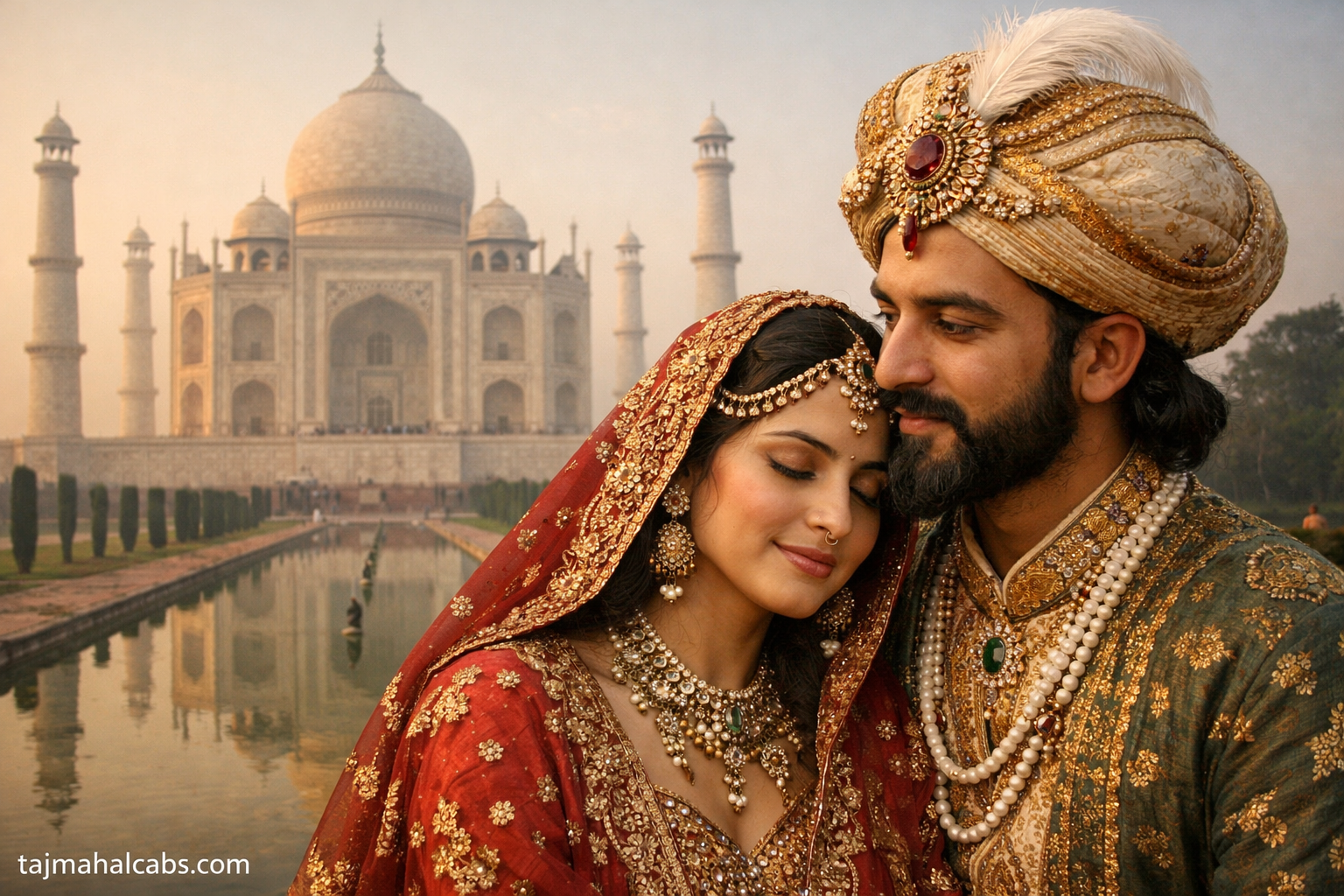
What Is the Taj Mahal Used For? Original & Modern Purpose
What Is the Taj Mahal Used For? Its Original and Modern Purpose
If you are wondering what the Taj Mahal is used for, the simplest answer is that it was originally built as a mausoleum and memorial for Mumtaz Mahal, the wife of Mughal emperor Shah Jahan.
Today, the Taj Mahal has a different but related role. It is a protected historic monument, a UNESCO World Heritage Site, an important example of Mughal architecture, and one of India’s most visited cultural landmarks.
The complex also contains a mosque that continues to have religious significance.
So the Taj Mahal is not simply a tourist attraction, and it was never originally built for tourism. Its purpose has changed over time while its historical and cultural importance has remained.
What Was the Taj Mahal Originally Built For?
The Taj Mahal was commissioned by Shah Jahan in memory of his wife Mumtaz Mahal, who died in 1631.
Its primary purpose was funerary.
In other words, the Taj Mahal was designed as a royal mausoleum — a monumental place associated with burial and remembrance.
Mumtaz Mahal was initially buried elsewhere before her remains were moved to the Taj Mahal complex.
Shah Jahan was later buried beside her after his death.
This is why the central monument is better understood as a tomb or mausoleum, rather than a palace or mosque.
Who Was the Taj Mahal Built For?
The Taj Mahal was built primarily for Mumtaz Mahal, the wife of Shah Jahan.
Her death had a profound effect on the emperor, and he commissioned an elaborate memorial in her honor.
The monument eventually became the burial place of both Mumtaz Mahal and Shah Jahan.
This is an important detail for first-time visitors because it explains why the Taj Mahal was designed as a monumental tomb rather than as a residence.
Is the Taj Mahal a Tomb?
Yes.
The main white-marble structure is a mausoleum.
It contains the cenotaphs associated with Mumtaz Mahal and Shah Jahan, while the actual graves are located in the crypt below.
This distinction can be confusing because visitors often see the decorative cenotaphs and assume they are the actual graves.
The building’s enormous scale reflects the importance given to royal burial and remembrance during the Mughal period.
If you are interested in the difference between the tomb and the mosque within the complex, our separate guide to the Taj Mahal mosque and mausoleum explains the distinction in more detail.
What Is the Taj Mahal Complex Used For?
The Taj Mahal is not just the central white-marble building.
The larger complex includes:
- The main mausoleum
- A large garden
- The main entrance gateway
- A mosque
- A matching building on the opposite side
- Other architectural and garden elements
Together, these elements form a carefully planned Mughal funerary complex.
The symmetry is one of its defining characteristics.
The mosque and the building opposite it help create visual balance around the central mausoleum.
What Is the Taj Mahal Used for Today?
The Taj Mahal’s modern purpose is very different from its original one.
Today, it functions primarily as a protected heritage monument and cultural landmark.
People visit it to experience:
- Mughal architecture
- Indian history
- Islamic and Persian artistic influences
- Marble craftsmanship
- Stone inlay work
- Calligraphy
- Mughal garden design
- The history of Shah Jahan and Mumtaz Mahal
It is also an important part of Agra’s tourism economy.
However, describing it only as a tourist attraction misses an important point.
The Taj Mahal remains a monument of historical, architectural and cultural significance, while the mosque within the complex retains a religious function.
Is the Taj Mahal Still Used as a Religious Site?
The main mausoleum is not a mosque or a regular place of worship.
However, the Taj Mahal complex contains a mosque on its western side.
That mosque has religious significance and is used for Muslim prayers, particularly Friday congregational prayer.
This is also connected with the Taj Mahal’s well-known Friday closure for general tourism.
If you are planning a visit, check the latest Taj Mahal Friday visitor information before choosing your travel date.
This distinction is important:
The Taj Mahal is a mausoleum.
The complex contains a mosque.
The two should not be treated as the same building.
What Is the Mosque Beside the Taj Mahal Used For?
The red sandstone mosque stands on the western side of the main mausoleum.
Its purpose is religious worship.
The mosque includes architectural features associated with Islamic religious buildings, including a prayer space and a mihrab indicating the direction of Mecca.
The mosque was incorporated into the overall design of the Taj Mahal complex rather than being an unrelated structure added later.
The building opposite the mosque contributes to the symmetry of the complex.
For visitors, this is one reason it is worth looking beyond the famous front photograph of the Taj Mahal.
Why Does the Taj Mahal Have a Mosque?
A mosque was incorporated into the complex because the Taj Mahal was designed within the cultural and religious context of the Mughal period.
The mosque served a practical religious purpose while also forming part of the architectural composition.
The Taj Mahal therefore combines several functions and ideas:
- Royal remembrance
- Burial
- Religious architecture
- Garden symbolism
- Imperial craftsmanship
- Architectural symmetry
This is one reason the complex is more interesting when you explore it as a whole rather than treating the central mausoleum as an isolated building.
What Is the Taj Mahal’s Main Purpose?
If you need the answer in one sentence:
The Taj Mahal was built primarily as a royal mausoleum and memorial for Mumtaz Mahal, while today it serves as a protected heritage monument and cultural landmark; its complex also contains a mosque used for Islamic prayer.
That distinction answers most of the confusion surrounding the question.
Why Was Such a Large Tomb Built?
A common question is why a tomb needed to be so enormous.
The answer lies partly in Mughal imperial culture.
Royal mausoleums could serve as statements of:
- Memory
- Status
- Power
- Faith
- Artistic achievement
- Dynastic identity
The Taj Mahal was therefore not intended to be an ordinary grave.
Its architecture was designed to create a lasting memorial.
The gardens, gateway, marble structure, calligraphy and decorative work all contribute to that purpose.
What Does the Taj Mahal Represent?
The Taj Mahal is often described as a symbol of love, and that interpretation is deeply connected with the story of Shah Jahan and Mumtaz Mahal.
But the monument represents more than romance.
It also represents:
Mughal architecture
Its design combines influences from Persian, Islamic, Central Asian and Indian architectural traditions.
Royal remembrance
The complex was created to preserve the memory of Mumtaz Mahal.
Religious and artistic traditions
Calligraphy, garden symbolism and architectural forms reflect the cultural environment in which the monument was created.
Imperial craftsmanship
The marble carving, inlay work and architectural precision demonstrate the skills of artisans working under Mughal patronage.
For that reason, reducing the Taj Mahal to a simple “love monument” doesn’t tell the whole story.
What Is Inside the Taj Mahal?
The central mausoleum contains the decorative cenotaphs associated with Mumtaz Mahal and Shah Jahan.
The actual burial chambers are below.
Visitors should also pay attention to the architectural details surrounding the tomb area.
Inside and around the mausoleum, you can see examples of:
- Marble lattice work
- Stone inlay
- Calligraphy
- Carved marble
- Geometric patterns
- Floral decoration
The interior is much more restrained than the exterior photographs often suggest.
Is the Taj Mahal a Palace?
No.
The Taj Mahal was not built as a palace or royal residence.
It was built as a mausoleum.
This is an important distinction because Agra has another major Mughal monument that served very different purposes: Agra Fort.
Agra Fort was a fortified imperial complex containing palaces, audience halls and residential spaces.
If you want to understand the difference between the two monuments, our guide to visiting the Taj Mahal and Agra Fort is a useful next step.
Was the Taj Mahal Built as a Tourist Attraction?
No.
Tourism was not its original purpose.
It was commissioned as a royal mausoleum and memorial in the 17th century.
Its role as a major visitor attraction developed much later.
Today, tourism is an important part of the Taj Mahal’s modern identity, but that should not be confused with why the monument was originally constructed.
This distinction is particularly useful for students and first-time international visitors who may encounter simplified descriptions online.
Why Do People Visit the Taj Mahal Today?
People visit for many different reasons.
History
Visitors want to understand the Mughal period and the story of Shah Jahan and Mumtaz Mahal.
Architecture
The monument is renowned for its symmetry, domes, minarets, marble and decorative craftsmanship.
Art
The stone inlay, calligraphy and carved marble deserve close attention.
Culture
The Taj Mahal has become an internationally recognized symbol associated with India.
Personal Experience
Some visitors come because they have seen photographs of the monument for years and want to experience it in person.
There is no single reason everyone should visit.
What Should First-Time Visitors Look At?
If this is your first visit, don’t spend the entire time taking photographs from the same viewpoint.
Look for details.
Notice the symmetry
Stand in the central garden and look at how the gateway, water channels and mausoleum relate to one another.
Look closely at the marble
The decorative work becomes more interesting when you examine it from close range.
Study the calligraphy
The inscriptions are integrated into the architecture rather than simply placed on the walls as decoration.
Look at the mosque and jawab
They help explain the overall balance of the complex.
Take your time
The Taj Mahal is more rewarding when you look at the details rather than simply checking it off a list.
When Can Tourists Visit the Taj Mahal?
The Taj Mahal is a working heritage site with regulated visitor access.
Opening arrangements follow daylight hours and the monument has a weekly closure for general tourism on Fridays.
Because visitor rules and schedules can change, check current information before your trip rather than relying on an old article.
For current planning, see our Taj Mahal opening hours and visitor timings guide.
What About Tickets?
Visitors need an appropriate entry ticket to access the Taj Mahal complex.
Ticket arrangements can differ depending on the type of visit and the areas you intend to enter.
Rather than repeating prices here — which can change — use our Taj Mahal tickets and entry information when preparing for your visit.
This keeps this article focused on the monument’s purpose rather than duplicating ticket information.
Is Sunrise the Best Time to Understand the Monument?
Sunrise is popular because of the cooler conditions and changing light on the marble.
But the “best” time depends on what you want from the visit.
Photographers may prefer early morning.
Travelers who dislike early starts may choose another suitable daytime period.
The important thing is to understand that timing affects your visitor experience, not the historical purpose of the monument.
If you want to compare different visiting conditions, read our guide to choosing the best time to visit the Taj Mahal.
Is the Taj Mahal Important Beyond Tourism?
Absolutely.
Its importance extends across several areas.
Historical importance
It is closely connected with the Mughal Empire and the reign of Shah Jahan.
Architectural importance
It is an outstanding example of Mughal architecture and craftsmanship.
Cultural importance
It has become one of the most recognizable symbols associated with India.
Religious and artistic importance
Its complex includes Islamic architectural elements, calligraphy, gardens and a mosque.
Heritage importance
It is internationally recognized as a UNESCO World Heritage Site.
These different layers are what make the Taj Mahal more than simply a beautiful building.
How the Taj Mahal’s Purpose Has Changed
The easiest way to understand the monument is to divide its history into three stages.
1. Original purpose: Royal mausoleum
The Taj Mahal was created as a memorial and burial complex for Mumtaz Mahal.
2. Historical legacy
Over time, it became an important monument representing Mughal architecture, history and craftsmanship.
3. Modern purpose: Heritage and cultural landmark
Today, people visit to learn, appreciate the architecture, experience the site and understand its place in Indian history.
The mosque within the complex continues to have religious significance.
So the Taj Mahal has not simply changed from “tomb” to “tourist attraction.”
Its original funerary identity remains central to what the monument is, while its cultural role has expanded considerably.
Common Misunderstandings About the Taj Mahal
“The Taj Mahal is a mosque.”
Incorrect.
The Taj Mahal is a mausoleum.
There is a mosque within the complex.
“The Taj Mahal is a palace.”
Incorrect.
It was built as a royal mausoleum, not a residence.
“The Taj Mahal was built for tourists.”
Incorrect.
Tourism came much later.
Its original purpose was memorial and funerary.
“Only the white marble building is the Taj Mahal.”
Not quite.
The Taj Mahal generally refers to the larger monument and complex, which includes gardens, gateway, mosque and other architectural elements.
“The Taj Mahal has no religious connection.”
Too simplistic.
The central mausoleum is not a place of regular worship, but the complex contains a mosque with continuing religious significance.
Why Understanding Its Purpose Makes the Visit Better
Knowing what the Taj Mahal was created to do changes how you look at it.
Instead of seeing only a beautiful white building, you begin to notice why the complex has:
- A central tomb
- Carefully arranged gardens
- A mosque
- Symmetrical architecture
- Religious calligraphy
- Monumental entrances
- Elaborate decorative craftsmanship
The architecture starts to make more sense when you understand the purpose behind it.
That is especially valuable for first-time visitors.
A Simple Way to Remember the Answer
If you forget everything else, remember these three points:
Originally:
The Taj Mahal was built as a royal mausoleum and memorial for Mumtaz Mahal.
Today:
It is a protected heritage monument and major cultural attraction.
Within the complex:
There is a mosque that continues to have religious significance.
That is the clearest answer to what the Taj Mahal is used for.
Frequently Asked Questions
What is the Taj Mahal used for? +
The Taj Mahal was originally built as a mausoleum and memorial for Mumtaz Mahal. Today, it is a protected heritage monument and cultural landmark visited for its history, architecture and artistic significance. The complex also contains a mosque used for Islamic prayer.
Why was the Taj Mahal built? +
Shah Jahan commissioned the Taj Mahal as a monumental memorial for his wife, Mumtaz Mahal, who died in 1631.
Is the Taj Mahal a tomb? +
Yes. The central white-marble structure is a mausoleum. It contains the cenotaphs associated with Mumtaz Mahal and Shah Jahan.
Who is buried in the Taj Mahal? +
Mumtaz Mahal and Shah Jahan are both buried in the Taj Mahal complex.
Is the Taj Mahal a mosque? +
No. The Taj Mahal itself is a mausoleum. A separate mosque forms part of the larger Taj Mahal complex.
Can Muslims pray at the Taj Mahal? +
The mosque within the Taj Mahal complex has religious significance and is used for Muslim prayer, including Friday congregational prayer.
Is the Taj Mahal still used today? +
Yes, but not for its original funerary purpose in the way a newly constructed mausoleum would be. Today it functions primarily as a protected heritage monument and cultural landmark, while the mosque within the complex retains a religious function.
Was the Taj Mahal built as a palace? +
No. It was built as a mausoleum, not a palace or residence.
Was the Taj Mahal built for tourists? +
No. It was built as a royal memorial and burial complex. Its role as a major tourist and heritage attraction developed much later.
Why is there a mosque at the Taj Mahal? +
The mosque was incorporated into the overall Mughal architectural and religious design of the complex. It provides a place for Muslim prayer and contributes to the symmetry of the monument.
What is the Taj Mahal famous for? +
It is famous for its Mughal architecture, white marble, symmetry, stone inlay, calligraphy, gardens and association with Shah Jahan and Mumtaz Mahal.
Can tourists visit inside the Taj Mahal? +
Yes, visitors can enter the designated visitor areas of the monument subject to current entry rules, tickets and security procedures. Check the latest visitor information before traveling.
Final Answer: What Is the Taj Mahal Used For?
The Taj Mahal was originally built as a royal mausoleum and memorial for Mumtaz Mahal, the wife of Mughal emperor Shah Jahan.
That is its fundamental historical purpose.
Today, the Taj Mahal serves a much broader cultural role as a protected heritage monument, architectural masterpiece and major visitor attraction.
The complex also contains a mosque that continues to have religious significance.
So if someone asks, “What is the Taj Mahal used for?”, the most accurate short answer is:
It was built as a mausoleum and memorial, and today it is preserved as an important heritage monument and cultural landmark, with a mosque in the complex that continues to be used for prayer.
Understanding that difference makes a visit more meaningful because you begin to see the Taj Mahal not simply as a famous photograph, but as a carefully designed historical complex with funerary, architectural, cultural and religious dimensions.
About the Author
Babloo (Alamgir Khan) is an Agra-based travel professional and founder of Taj Mahal Cabs. His travel guides focus on practical information and the questions first-time visitors commonly have when planning a visit to the Taj Mahal and Agra.
And if you’re still deciding what to see, start with our practical guide to Agra attractions.
👨💼for Booking & Inquiry Please Call / WhatsApp to +91 7500-840-840





Last reviewed: August 2026
Author
Babloo, Taj Mahal Cabs