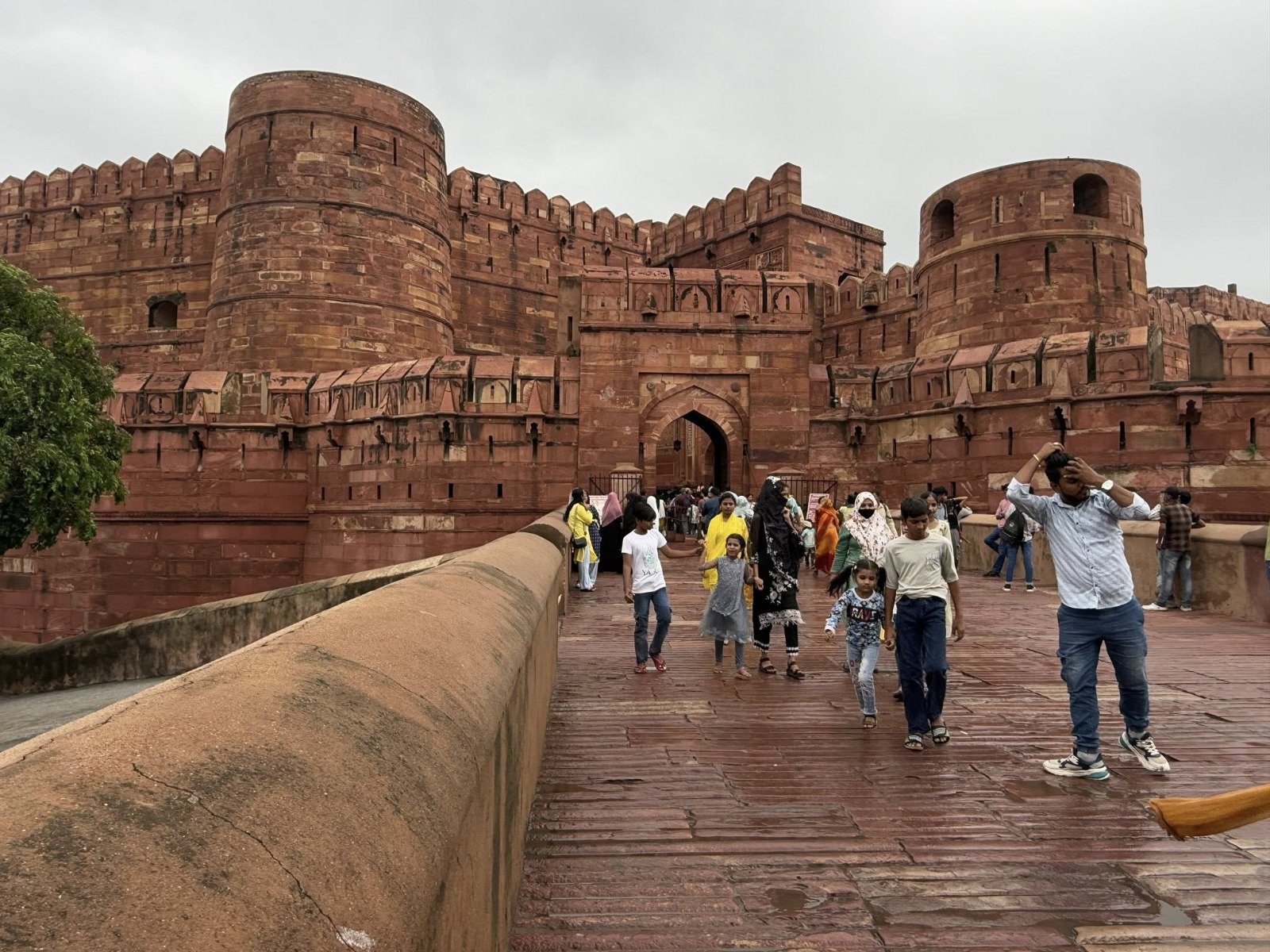
8 day Golden Triangle itinerary with Ranthambore
8-Day Golden Triangle Itinerary with Ranthambore Safari
Delhi → Agra → Fatehpur Sikri → Ranthambore → Jaipur → Delhi
An 8-day Golden Triangle itinerary with Ranthambore is a good choice for travelers who want more than India’s famous Delhi–Agra–Jaipur circuit.
Over eight days, you can combine Delhi’s historic landmarks, the Taj Mahal in Agra, Fatehpur Sikri’s Mughal heritage, a wildlife safari in Ranthambore, and Jaipur’s royal architecture without trying to fit everything into only a few days.
The biggest advantage of adding Ranthambore is the contrast.
One day you can be standing in front of the Taj Mahal; another can take you into a protected wildlife landscape where Bengal tigers and other animals live in their natural habitat.
This itinerary is designed for travelers who want culture, history, architecture and wildlife in one India trip.
Babloo’s practical advice: Eight days is enough for this combination, but don’t treat every day as a race between attractions. Allow time for road transfers, rest and the unpredictable nature of wildlife safaris.
8-Day Golden Triangle and Ranthambore Route at a Glance
| Day | Route / Destination | Main Experience | Overnight |
|---|---|---|---|
| Day 1 | Arrive in Delhi | Arrival and optional easy sightseeing | Delhi |
| Day 2 | Delhi | Old & New Delhi sightseeing | Delhi |
| Day 3 | Delhi → Agra | Agra Fort and local sightseeing | Agra |
| Day 4 | Agra → Fatehpur Sikri → Ranthambore | Taj Mahal sunrise + Mughal heritage | Ranthambore |
| Day 5 | Ranthambore | Wildlife safari and nature | Ranthambore |
| Day 6 | Ranthambore → Jaipur | Transfer to Jaipur | Jaipur |
| Day 7 | Jaipur | Amber Fort and Pink City highlights | Jaipur |
| Day 8 | Jaipur → Delhi / onward journey | Final transfer | — |
Route: Delhi → Agra → Fatehpur Sikri → Ranthambore → Jaipur → Delhi
The exact order can be customized according to your arrival and departure arrangements.
Why Add Ranthambore to the Golden Triangle?
The traditional Golden Triangle connects:
Delhi + Agra + Jaipur
It is one of India’s best-known travel circuits because it combines Mughal history, royal Rajasthan, monuments, markets and cultural experiences.
Ranthambore adds something completely different:
wildlife.
Instead of spending all eight days visiting urban monuments, you get an opportunity to experience a protected natural environment and go on a safari.
This makes the itinerary particularly attractive to:
- First-time visitors to India
- Couples
- Families
- Wildlife enthusiasts
- Photographers
- History lovers
- Travelers interested in culture and nature
- Visitors with around one week plus an extra day
If you want to understand the traditional route first, our complete Golden Triangle travel guide provides broader background on Delhi, Agra and Jaipur.
Day 1: Arrive in Delhi
Your 8-day journey begins in Delhi.
After arriving at the airport, transfer to your hotel and allow yourself time to recover from your flight.
If you arrive early and feel comfortable, you can take an easy introduction to the city.
Depending on your arrival time, possible stops include:
- India Gate
- Humayun’s Tomb
- Lotus Temple
- Connaught Place
- A short Old Delhi experience
Don’t try to complete a full Delhi sightseeing program if you arrive after a long international flight.
Overnight: Delhi
Practical tip
Keep Day 1 flexible.
A relaxed arrival day can make the following sightseeing days much more enjoyable.
Day 2: Full-Day Delhi Sightseeing
Spend your second day exploring Delhi’s historic and modern sides.
Possible highlights include:
Old Delhi
Explore the historic streets around Jama Masjid and Chandni Chowk.
A short rickshaw ride can provide a different perspective on the busy lanes and markets.
Red Fort
The Red Fort is one of Delhi’s most recognizable Mughal monuments.
Qutub Minar
The towering Qutub Minar complex provides a very different architectural experience from Old Delhi.
Humayun’s Tomb
This important Mughal-era monument is another worthwhile stop if your schedule allows.
Raj Ghat
Visitors interested in modern Indian history may also include Raj Ghat.
You don’t need to visit every attraction.
A good private itinerary can be adjusted according to your interests and the time available.
Overnight: Delhi
Day 3: Delhi to Agra
After breakfast, leave Delhi for Agra.
Agra is the city where the Taj Mahal is located, so this is the point where your journey shifts from India’s capital to one of its most important Mughal heritage destinations.
After arriving and checking into your hotel, visit one or more Agra attractions.
Agra Fort
Agra Fort is one of the city’s most important historical sites.
Its enormous red sandstone walls contain palaces, halls, courtyards and royal residences connected with the Mughal period.
Itimad-ud-Daulah
Often called the Baby Taj, this smaller marble tomb is known for its detailed decorative work and architectural influence.
Mehtab Bagh
If time and weather permit, Mehtab Bagh can provide a different perspective toward the Taj Mahal across the Yamuna River.
For a broader overview of the city’s heritage, see our guide to Agra’s main attractions.
Overnight: Agra
Day 4: Taj Mahal Sunrise, Fatehpur Sikri and Ranthambore
This is one of the most important days of the itinerary.
Early Morning: Taj Mahal at Sunrise
Start early for the Taj Mahal.
Sunrise can be an especially beautiful time to visit because the light changes across the white marble as the morning develops.
Allow enough time to pass through security and explore the monument complex rather than treating the Taj Mahal as a quick photo stop.
If sunrise is the main reason for your early start, plan your hotel and transportation accordingly.
Our Taj Mahal sunrise planning guide provides additional information for visitors considering an early visit.
Late Morning: Depart for Fatehpur Sikri
After visiting the Taj Mahal and having breakfast, continue toward Fatehpur Sikri.
This historic Mughal city was built during the reign of Emperor Akbar and contains important examples of Mughal architecture.
Depending on your interests and available time, highlights can include:
- Buland Darwaza
- Jama Masjid
- Diwan-i-Khas
- Panch Mahal
- Akbar’s palace complex
Allow enough time for the visit without turning the day into an exhausting race.
Continue to Ranthambore
After Fatehpur Sikri, continue toward Ranthambore.
This is one of the longer travel sections of the itinerary, so your exact schedule should allow for traffic, breaks and road conditions.
After reaching Ranthambore, check into your hotel and relax.
Overnight: Ranthambore
Day 5: Ranthambore Wildlife Safari
Today the focus changes completely from monuments to wildlife.
Ranthambore is famous for its tiger population and is one of India’s best-known wildlife destinations.
A safari offers the opportunity to observe animals in their natural environment rather than in a zoo.
Depending on availability and the applicable park arrangements, your day may include a morning or afternoon safari.
Possible wildlife sightings can include:
- Bengal tiger
- Leopard
- Sloth bear
- Sambar deer
- Spotted deer
- Nilgai
- Crocodiles
- Many bird species
Important: Tiger Sightings Are Never Guaranteed
This is important for responsible travel planning.
Ranthambore is a wildlife habitat, not a controlled animal-viewing experience.
A tiger may be visible during your safari—or it may not.
Sightings depend on factors such as:
- Animal movement
- Weather
- Season
- Vegetation
- Safari zone
- Time of day
- Luck
A responsible itinerary should never promise a tiger sighting.
The safari is about experiencing the ecosystem and wildlife, not guaranteeing a particular animal encounter.
How Many Safaris Should You Take?
If wildlife is a major priority, consider allowing enough time for more than one safari when availability permits.
Multiple drives can improve your overall opportunity to observe wildlife because conditions and animal movements change.
However, additional safaris also increase the cost of the trip.
Choose according to your interests and budget.
Overnight: Ranthambore
Day 6: Ranthambore to Jaipur
After breakfast, continue toward Jaipur.
Jaipur is the capital of Rajasthan and the final major destination on this Golden Triangle itinerary.
The journey provides a change of scenery as you leave the wildlife environment and approach Rajasthan’s historic capital.
After checking into your Jaipur hotel, keep the rest of the day relatively relaxed.
Depending on arrival time, you might visit:
- Jal Mahal
- A local market
- A neighborhood restaurant
- A cultural performance
Don’t overload this day after your Ranthambore experience.
Overnight: Jaipur
Day 7: Jaipur Sightseeing
Today is dedicated to Jaipur.
The city is known for its royal history, colorful markets and distinctive architecture.
Amber Fort
Begin with Amber Fort, one of Jaipur’s most important historical attractions.
The fort combines Rajput and Mughal architectural influences and offers impressive views of the surrounding landscape.
City Palace
Continue to the City Palace complex, where museums and royal buildings provide insight into Jaipur’s history.
Hawa Mahal
The Palace of Winds is one of Jaipur’s most recognizable façades and a popular photography stop.
Jantar Mantar
This historic astronomical observatory demonstrates the scientific interests of the Jaipur court.
Depending on your interests, you may also visit:
- Jal Mahal
- Albert Hall Museum
- Birla Mandir
- Local bazaars
- Traditional craft shops
Try to leave some free time rather than filling every hour with monuments.
Overnight: Jaipur
Day 8: Jaipur to Delhi or Your Next Destination
Your final day depends on your onward travel plans.
You can:
Option 1: Return to Delhi
Travel back to Delhi for your international flight or onward journey.
Option 2: Depart from Jaipur
If your travel plans allow, you can finish the itinerary in Jaipur rather than returning to Delhi.
Option 3: Extend Your India Trip
You can also use Jaipur as the starting point for a longer Rajasthan journey.
This is one of the advantages of a private itinerary: the final destination doesn’t necessarily have to be the same place where you began.
Why This 8-Day Itinerary Works
This itinerary works because each destination provides something different.
Delhi
Capital, history and urban culture
Agra
Mughal architecture and the Taj Mahal
Fatehpur Sikri
Historic Mughal city
Ranthambore
Wildlife and nature
Jaipur
Rajput heritage and royal architecture
Instead of repeating similar sightseeing experiences, the route changes character several times.
That makes it especially suitable for travelers who want a varied first experience of India.
Is 8 Days Enough for the Golden Triangle and Ranthambore?
Yes, eight days is enough for a well-planned itinerary, but it is not a slow-paced holiday.
You will have several travel days, particularly when moving between Agra, Fatehpur Sikri, Ranthambore and Jaipur.
If you enjoy seeing a lot during one trip, eight days can work very well.
If you prefer leisurely mornings, long hotel stays and fewer road journeys, consider adding another one or two nights.
Why Choose 8 Days Instead of a Shorter Golden Triangle Tour?
A shorter Golden Triangle itinerary can cover the major cities efficiently.
But adding Ranthambore changes the pace and adds another type of experience.
A shorter trip may suit you if:
- You mainly want Delhi, Agra and Jaipur.
- You have limited vacation time.
- Wildlife is not a priority.
- You prefer fewer hotel changes.
Eight days with Ranthambore may suit you if:
- You want both culture and wildlife.
- You want more time in each destination.
- You want a dedicated safari experience.
- You are visiting India for the first time.
- You have around a week plus additional travel time.
If you prefer a shorter classic circuit, our 7-day Golden Triangle itinerary is a useful alternative.
Is Ranthambore Worth Adding to the Golden Triangle?
For travelers interested in wildlife, yes, it can be an excellent addition.
The Golden Triangle focuses heavily on architecture, history and urban culture.
Ranthambore gives the itinerary a completely different dimension.
You move from:
Mughal monuments → historic cities → wildlife → Rajput heritage
That variety is one of the strongest reasons to choose this route.
However, if you are mainly interested in architecture and cultural sightseeing, you may prefer spending the additional night in Agra or Jaipur instead.
What Is the Best Time for This Trip?
The best time depends on which part of the experience matters most to you.
For comfortable sightseeing in Delhi, Agra and Jaipur, cooler months are generally more pleasant than the hottest part of the year.
For Ranthambore, wildlife-viewing conditions vary by season, and park access and safari arrangements can change.
Before booking, check the current safari season, availability and entry arrangements for your travel dates.
Do not choose a travel date solely because someone promises better tiger sightings.
Wildlife remains unpredictable.
How Much Driving Is Involved?
This is an important consideration.
The itinerary includes several road journeys:
Delhi → Agra
Agra → Fatehpur Sikri → Ranthambore
Ranthambore → Jaipur
Jaipur → Delhi, if required
The longest sections should include reasonable breaks.
Road journey times are estimates and can change because of:
- Traffic
- Road conditions
- Weather
- Stops
- Construction
- Local congestion
If you are traveling with children or older family members, tell your driver or tour planner in advance so the schedule can be made more comfortable.
Private Car or Train: Which Is Better?
Both can work.
Private car
A private vehicle is useful if you want:
- Flexible departure times
- Door-to-door transfers
- Multiple stops
- Easier luggage handling
- A customized itinerary
- Direct travel between Agra, Fatehpur Sikri and Ranthambore
Train
Trains can be useful on selected routes where schedules fit your itinerary.
However, adding Fatehpur Sikri and Ranthambore can make a road-based itinerary more convenient.
There is no universally best option.
Choose based on your priorities rather than assuming one method is always superior.
What Should You Pack?
For an eight-day itinerary covering cities and wildlife, pack for both sightseeing and outdoor conditions.
Useful items include:
- Comfortable walking shoes
- Lightweight clothing
- A warmer layer for cooler mornings when appropriate
- Sun protection
- Sunglasses
- Hat or cap
- Reusable water bottle
- Personal medications
- Small day bag
- Camera or phone
- Binoculars if you enjoy bird and wildlife observation
For safari days, neutral and comfortable clothing is generally practical.
Avoid assuming that you need expensive safari equipment.
What About Food During the Trip?
Delhi, Agra, Ranthambore and Jaipur each offer different food experiences.
You can enjoy:
- North Indian dishes
- Mughlai cuisine
- Rajasthani specialties
- Vegetarian meals
- Street food
- International options in major tourist areas
If you are interested specifically in Agra’s food scene, see our Agra food itinerary for ideas.
When eating street food, choose busy, clean-looking places and use normal food and water precautions.
Is This Itinerary Suitable for Families?
Yes, but families should understand that this is an active trip.
Children may enjoy the variety:
monuments → Taj Mahal → wildlife safari → forts → palaces
However, several road journeys can be tiring.
Families can make the trip easier by:
- Starting early when practical
- Allowing breaks
- Avoiding overly long sightseeing days
- Choosing comfortable hotels
- Carrying snacks and water
- Scheduling downtime after long transfers
A private vehicle can make family travel more flexible.
Is This Itinerary Suitable for Older Travelers?
Yes, with some customization.
The main consideration is the amount of walking and road travel.
Allow additional time at monuments, choose hotels carefully and avoid packing too many attractions into one day.
A private car can also reduce unnecessary walking between destinations.
Tell your travel planner about mobility requirements before finalizing the itinerary.
What Is Included in a Typical Private Tour?
In a customized Taj Mahal Cabs itinerary, inclusions can vary depending on the package selected.
A package may include:
- Private air-conditioned vehicle
- Driver
- Hotel accommodation
- Breakfast
- Local sightseeing
- Local guides
- Airport or hotel transfers
Potential exclusions can include:
- Monument entrance fees
- Safari fees
- Personal expenses
- Meals not specified
- Tips
- Travel insurance
- Flights
- Visa fees
Always confirm the exact inclusions and exclusions before booking.
Don’t assume that a service is included simply because it appears in a sample itinerary.
Why Use a Private Itinerary?
An eight-day multi-city route involves several transfers.
A private itinerary can make it easier to adjust:
- Departure times
- Hotel choices
- Sightseeing stops
- Rest breaks
- Safari preferences
- Pickup and drop-off locations
This can be particularly useful for families and small groups.
The goal should not simply be to move between destinations.
The goal should be to make the journey comfortable enough that you still have energy to enjoy each destination.
Important Planning Notes
Taj Mahal closure
Check the current Taj Mahal opening arrangements before fixing your itinerary and especially before scheduling the sunrise visit.
Safari availability
Ranthambore safari permits and slots should be checked in advance.
Wildlife sightings
No responsible operator can guarantee a tiger sighting.
Travel times
Road journey times are estimates.
Hotel availability
Specific hotels may not always be available on your dates, particularly during busy periods.
Seasonal conditions
Weather can affect sightseeing comfort and wildlife experiences.
A More Relaxed 8-Day Alternative
If you don’t want the trip to feel rushed, consider reducing the number of attractions each day.
For example:
Day 1: Delhi arrival
Day 2: Delhi
Day 3: Delhi → Agra
Day 4: Taj Mahal → Fatehpur Sikri → Ranthambore
Day 5: Ranthambore safari
Day 6: Ranthambore → Jaipur
Day 7: Jaipur
Day 8: Jaipur departure
This is already a fairly full itinerary.
If you want significantly more free time, add another night.
Who Should Choose This 8-Day India Itinerary?
This trip is particularly suitable if you want to combine:
History + Architecture + Culture + Wildlife
It may not be the right choice if you want a relaxing beach holiday or a slow trip with very few hotel changes.
But for a first India visit, the combination can provide a remarkably broad introduction to northern India.
Frequently Asked Questions
Is 8 days enough for the Golden Triangle with Ranthambore? +
Yes. Eight days can cover Delhi, Agra, Fatehpur Sikri, Ranthambore and Jaipur, although the itinerary involves several travel days.
What is the route for an 8-day Golden Triangle with Ranthambore? +
A practical route is Delhi → Agra → Fatehpur Sikri → Ranthambore → Jaipur → Delhi.
How many nights should I spend in Ranthambore? +
Two nights can make the wildlife portion more worthwhile because it provides more flexibility for safari scheduling.
Is a tiger sighting guaranteed in Ranthambore? +
No. Tigers are wild animals and sightings are never guaranteed.
Can I take a safari in Ranthambore? +
Yes, subject to current park access, safari availability, permitted zones and booking arrangements.
Is this itinerary good for first-time visitors to India? +
Yes. It combines several of northern India’s most recognizable cultural and historical destinations with a wildlife experience.
Can I customize the 8-day itinerary? +
Yes. The number of attractions, hotel category, safari arrangements and final departure location can be adjusted according to your needs and availability.
Can I finish the tour in Jaipur? +
Yes. If your onward journey begins from Jaipur, you can finish there rather than returning to Delhi.
Is a private car useful for this itinerary? +
A private car can be particularly convenient because the route includes several road transfers and a stop at Fatehpur Sikri.
What is better: a 7-day Golden Triangle or 8-day Golden Triangle with Ranthambore? +
The 7-day option is better if you mainly want Delhi, Agra and Jaipur. The 8-day itinerary is better if you want to add a dedicated wildlife experience in Ranthambore.
Final Thoughts
An eight-day Golden Triangle itinerary with Ranthambore is not simply a longer version of a standard Delhi–Agra–Jaipur tour.
It combines several very different sides of India:
Delhi for history and city life.
Agra for the Taj Mahal and Mughal heritage.
Fatehpur Sikri for another chapter of Mughal history.
Ranthambore for wildlife and nature.
Jaipur for Rajasthan’s royal heritage.
The result is a trip with much more variety than a traditional city-only itinerary.
The key is to keep expectations realistic.
Road journeys take time. Safari sightings cannot be guaranteed. Weather can affect your experience. And trying to visit every possible attraction can make an otherwise wonderful trip exhausting.
Plan fewer things well rather than everything badly.
Babloo’s final advice: If this is your first trip to India and you have eight days, the Golden Triangle with Ranthambore gives you a strong balance of monuments, culture and wildlife. Keep the itinerary flexible enough to enjoy the journey—not just the checklist.
And if you’re still deciding what to see, start with our practical guide to Agra attractions.
👨💼for Booking & Inquiry Please Call / WhatsApp to +91 7500-840-840





Last reviewed: August 2026
Author
Babloo, Taj Mahal Cabs
👮♂️Vehicles We Use in Tours


You must be logged in to post a comment.