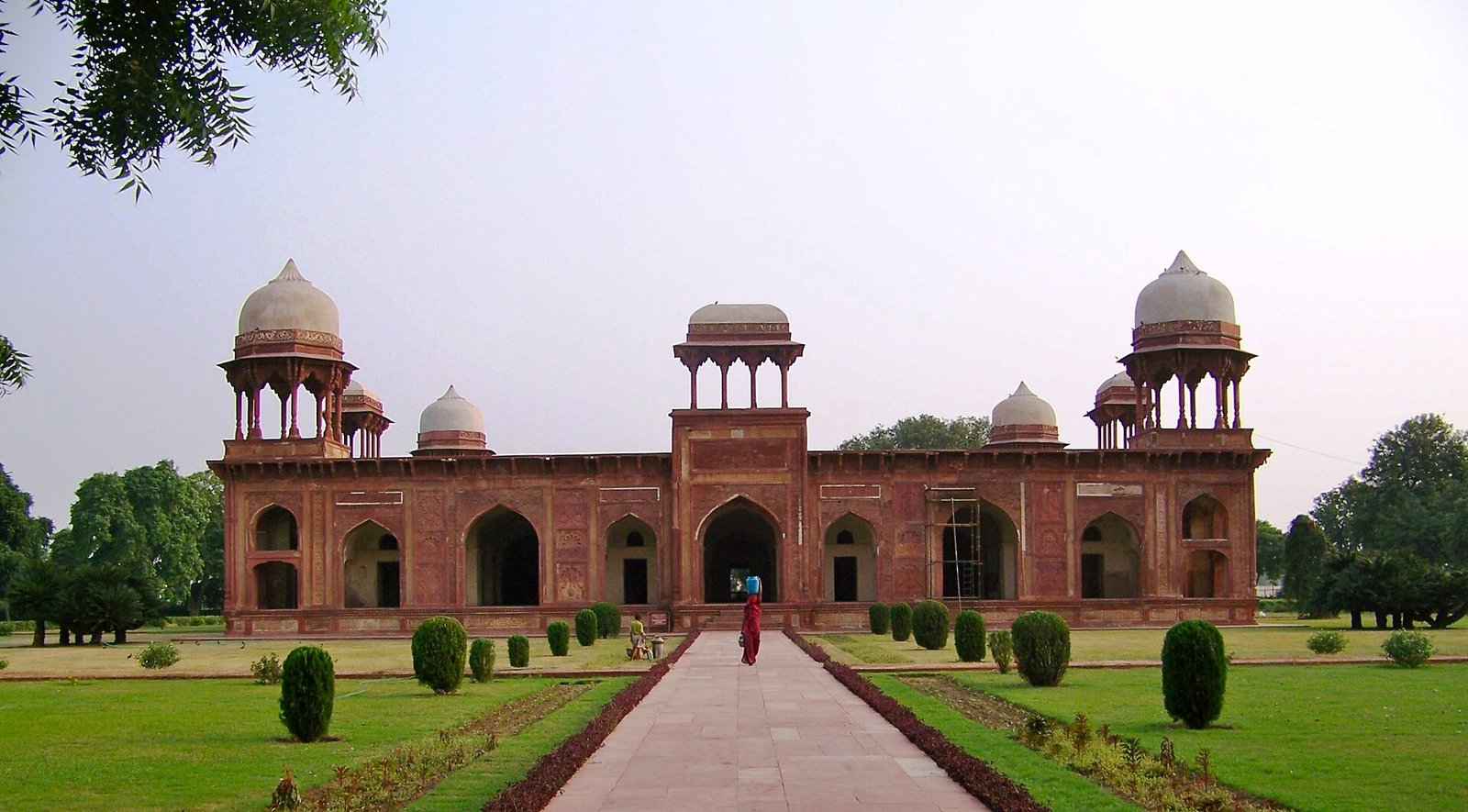
Maryam’s Tomb Agra Travel Guide: History, Fees & Tips
Maryam’s Tomb Agra: Complete Travel Guide for First-Time Visitors
If you are visiting Agra for the first time and want to explore more than the Taj Mahal and Agra Fort, Maryam’s Tomb is a worthwhile addition to a heritage itinerary. Located in the Sikandra area of Agra, this lesser-known monument is associated with Mariam-uz-Zamani, the Rajput empress of Emperor Akbar and mother of Emperor Jahangir.
Unlike Agra’s busiest monuments, Maryam’s Tomb is usually a quieter place to explore. Its carved sandstone architecture, walled garden setting and connection with Mughal and Rajput history make it especially interesting for travelers who enjoy history, architecture and less-visited heritage sites.
This guide explains what Maryam’s Tomb is, who Maryam-uz-Zamani was, where the monument is located, how much it costs to visit, how to reach it, what to see, how long to spend there and how to combine it with other Agra attractions.
Maryam’s Tomb at a Glance
| Information | Details |
|---|---|
| Location | Sikandra, Agra, Uttar Pradesh |
| Associated with | Mariam-uz-Zamani |
| Historical period | Mughal era |
| Monument status | ASI-protected monument |
| Opening | Sunrise to sunset |
| Weekly closure | Open all seven days according to the Agra district tourism listing |
| Indian / SAARC / BIMSTEC visitors | ₹25 per person |
| Other foreign nationals | ₹300 per person |
| Children below 15 | Free |
| Suggested visit time | About 30–60 minutes |
| Nearby major monument | Akbar’s Tomb, about 1 km away |
Entry fees and visitor information can change, so check the latest official information before your visit.
The current Agra district tourism listing confirms that the monument is ASI protected, open from sunrise to sunset and located about 1 km from Akbar’s Tomb.
What Is Maryam’s Tomb?
Maryam’s Tomb, also written as Mariam’s Tomb, is the mausoleum associated with Mariam-uz-Zamani, a prominent royal woman of the Mughal period.
The monument stands in a walled garden near Sikandra. The Agra district’s official description notes that the tomb was adapted from a Lodi-era baradari, giving the building an architectural history that predates its use as Maryam-uz-Zamani’s mausoleum.
That detail is one reason the monument is particularly interesting. It is not simply another large Mughal tomb built from scratch. Its present form reflects the adaptation of an earlier structure within the changing architectural landscape of Agra.
For travelers who want the deeper story of the monument and its royal occupant, see our guide to the history of Maryam-uz-Zamani.
Who Was Maryam-uz-Zamani?
Mariam-uz-Zamani was a Rajput royal woman who became an important member of Emperor Akbar’s household and the mother of Emperor Jahangir.
Her historical identity is sometimes confused with the popular name “Jodha Bai.” Because the terminology surrounding Akbar’s Rajput wives has become complicated through later traditions, films and popular tourism literature, it is better to use Mariam-uz-Zamani when discussing the historical figure associated with this tomb.
She lived during a period when Mughal and Rajput political relationships were developing significantly. Her position within the Mughal royal family makes the monument relevant not only to architectural history but also to the history of women and royal relationships during the Mughal period.
For a more detailed historical account, including the tomb’s connection with Jahangir and the development of the monument, read our Maryam-uz-Zamani Tomb history guide.
Why Visit Maryam’s Tomb?
Maryam’s Tomb is not essential for every short Agra visit. If you have only a few hours in the city, the Taj Mahal and Agra Fort will normally take priority.
However, the tomb becomes more attractive when you have additional time or want to explore Agra’s lesser-known heritage.
Reasons to consider a visit
- It offers a quieter heritage experience.
- It is close to Akbar’s Tomb in Sikandra.
- The sandstone architecture is different from the white-marble appearance of the Taj Mahal.
- It provides another perspective on Mughal and Rajput history.
- The garden setting gives the monument a different atmosphere from Agra’s busiest tourist sites.
- It can be combined conveniently with other attractions around Sikandra.
The official Agra tourism description specifically recommends the monument as an additional stop for visitors already visiting Akbar’s Tomb.
Where Is Maryam’s Tomb in Agra?
Maryam’s Tomb is in Sikandra, on the Agra–Mathura side of the city.
It is approximately 1 kilometre from Akbar’s Tomb, making the two monuments particularly easy to combine in the same sightseeing circuit. The official Agra district tourism page places the tomb on NH-19 at Sikandra, about 1 km from Akbar’s Tomb toward Agra city.
This location also makes Maryam’s Tomb useful for travelers exploring the western and northern heritage areas of Agra rather than staying only around the Taj Mahal.
If you are coming from the Taj Mahal, Agra Cantt Railway Station or Delhi, see our detailed guide on how to reach Maryam’s Tomb.
Maryam’s Tomb Entry Fee and Timings
According to the current Agra district tourism listing, Maryam’s Tomb is open from sunrise to sunset, all seven days. The listed admission fees are:
- Indian citizens: ₹25
- SAARC / BIMSTEC nationals: ₹25
- Other foreign nationals: ₹300
- Children below 15: Free
The same official source notes that fees can be revised, so travelers should verify the current rate before visiting.
For a more detailed explanation of tickets, visitor rules and practical entry information, see our Maryam’s Tomb entry fee and timings guide.
What to See at Maryam’s Tomb
Maryam’s Tomb is relatively compact compared with some of Agra’s larger Mughal monuments, so you do not need several hours simply to see the main structure.
During your visit, pay attention to:
The Sandstone Exterior
The carved sandstone façades are among the most noticeable features of the monument. The warm tones and carved surfaces give the building a character very different from the Taj Mahal.
The Walled Garden
The tomb stands within a walled garden, creating a quieter setting for the monument. The garden also helps visitors understand the relationship between Mughal funerary architecture and landscaped surroundings.
Arches and Decorative Details
Look closely at the openings, carved surfaces and architectural details rather than viewing the monument only from a distance.
The Overall Structure
One of the most interesting things about Maryam’s Tomb is its architectural history. The official Agra description identifies the building as an adaptation of a Lodi-era baradari.
For travelers particularly interested in architectural details, our dedicated Maryam’s Tomb architecture guide goes deeper into the building’s design and historical development.
Maryam’s Tomb Architecture
Maryam’s Tomb is worth examining as part of the broader development of architecture in Agra.
Its red sandstone appearance connects it visually with the architectural traditions associated with the earlier Mughal period. At the same time, the monument’s existing structure has an older history, having been adapted from a Lodi-era baradari according to the official Agra tourism description.
This makes the building particularly useful for understanding how architectural forms were reused and adapted over time.
If architecture is one of your main interests, don’t rush this section of your visit. Walk around the exterior, observe the carved sandstone and look at how the structure sits within its enclosed garden.
Read the detailed Maryam’s Tomb architecture guide for a closer examination of its design.
How Much Time Do You Need?
For most visitors, 30 to 60 minutes is a reasonable amount of time for Maryam’s Tomb.
You may want longer if you:
- enjoy architectural photography;
- are interested in Mughal history;
- want to explore the garden slowly;
- are visiting with a guide;
- plan to combine the visit with Akbar’s Tomb.
Because Akbar’s Tomb is only about 1 km away, visiting both monuments together makes more sense than treating Maryam’s Tomb as a separate long excursion.
Best Time to Visit Maryam’s Tomb
The best time depends on what you want from the visit.
For comfortable sightseeing
The cooler months from roughly October to March are generally more comfortable for exploring Agra’s outdoor monuments.
For photography
Early morning and late afternoon can provide softer light and more comfortable temperatures.
During summer
Agra can become very hot, especially around midday. If you visit during the hotter months, an earlier or later visit is usually more comfortable than a long midday stop.
The important point is not to treat Maryam’s Tomb as a sunrise-only attraction. The monument is officially listed as open from sunrise to sunset.
How to Reach Maryam’s Tomb
Maryam’s Tomb is accessible by road from Agra and is particularly easy to include in a private-car or taxi sightseeing route.
If you are already visiting Akbar’s Tomb, the two monuments are only about 1 km apart.
From central Agra, a taxi, auto-rickshaw or other local transport can be used to reach the Sikandra area.
Travelers arriving from Delhi can first reach Agra by train or road and then continue to Sikandra.
For exact route options, railway-station information and Delhi-to-Agra travel planning, use our dedicated guide to reaching Maryam’s Tomb in Agra.
How to Include Maryam’s Tomb in an Agra Itinerary
Maryam’s Tomb works best as part of a broader heritage itinerary rather than as the only reason for traveling to this part of Agra.
If you have half a day
You could combine:
Maryam’s Tomb → Akbar’s Tomb → another nearby Agra attraction
This works well for travelers interested in Mughal history.
If you have one full day
A broader Agra itinerary could include the Taj Mahal, Agra Fort and other major sights, with Maryam’s Tomb added if your schedule allows.
If you want a quieter heritage experience
Give more time to the Sikandra area and combine Maryam’s Tomb with Akbar’s Tomb and other nearby attractions.
For practical route planning and suggested combinations, see our Maryam’s Tomb Agra itinerary.
Photography at Maryam’s Tomb
Maryam’s Tomb can be rewarding for photographers who enjoy architectural details rather than only iconic postcard views.
Look for:
- sandstone textures;
- arches and openings;
- symmetry;
- garden perspectives;
- close architectural details;
- changing light on the carved surfaces.
Rather than photographing only the front façade, walk around the monument and look for different compositions.
Our dedicated Maryam’s Tomb photography tips cover composition, lighting and practical photography ideas in greater detail.
Always follow the monument’s current visitor and photography rules.
Cultural and Historical Significance
Maryam’s Tomb is significant because it connects several parts of Agra’s history.
The monument is associated with:
- Mughal royal history;
- Rajput-Mughal relationships;
- the history of royal women;
- architectural reuse and adaptation;
- the development of Agra as a major Mughal centre.
Its importance is therefore broader than simply being a lesser-known tourist attraction.
It also provides an opportunity to look beyond the most famous Mughal emperors and monuments and consider the people, relationships and cultural exchanges that shaped the period.
For a deeper discussion of these themes, see our guide to the cultural significance of Maryam’s Tomb.
Places to Visit Near Maryam’s Tomb
The strongest nearby combination is Akbar’s Tomb at Sikandra, which is approximately 1 km away. The two monuments can easily be considered part of the same heritage circuit.
Depending on your available time, you can also explore other Agra attractions after visiting the Sikandra area.
If you specifically want to explore lesser-known places around this part of the city, see our guide to places to visit near Maryam’s Tomb.
Maryam’s Tomb vs Other Agra Monuments
Maryam’s Tomb should not be viewed as a replacement for the Taj Mahal or Agra Fort. It serves a different purpose in an Agra itinerary.
| Monument | Best for |
| Taj Mahal | Iconic Mughal architecture and one of India’s most famous monuments |
| Agra Fort | Mughal imperial history and fort architecture |
| Akbar’s Tomb | Akbar-era architecture and a large garden-tomb complex |
| Maryam’s Tomb | Lesser-known heritage, royal history and sandstone architecture |
| Itimad-ud-Daulah | Fine Mughal decoration and marble inlay |
If you are deciding whether Maryam’s Tomb is worth adding to your itinerary, our comparison of Maryam’s Tomb with other Mughal monuments can help you choose based on your interests and available time.
Practical Tips for First-Time Visitors
A few simple decisions can make the visit more enjoyable.
1. Combine it with Akbar’s Tomb
This is the most logical pairing because the monuments are very close to one another.
2. Check current fees before leaving
Monument fees and visitor arrangements can change. The official Agra tourism listing should be your starting point for current information.
3. Avoid the hottest part of the day when possible
The visit involves outdoor walking, so comfortable weather makes a noticeable difference.
4. Allow time for the details
Maryam’s Tomb is not a monument that needs to be rushed through. Look closely at the sandstone and architectural elements.
5. Respect the heritage site
Follow current instructions about photography, access, litter, restricted areas and monument conservation.
6. Don’t expect a Taj Mahal-style experience
This is important for first-time visitors.
Maryam’s Tomb is smaller, quieter and less monumental in scale. Its attraction lies in its history, architecture and atmosphere rather than in being another grand landmark comparable to the Taj Mahal.
Is Maryam’s Tomb Worth Visiting?
Yes, if you have enough time in Agra and enjoy history, architecture or quieter heritage sites.
If this is your first visit to India and you have only a few hours in Agra, prioritize the Taj Mahal and Agra Fort.
If you have a full day, are staying longer, or are particularly interested in Mughal history, adding Maryam’s Tomb can make your itinerary more varied.
It is especially worthwhile when combined with Akbar’s Tomb in Sikandra, since the two sites are very close to each other.
The best reason to visit is not that it is a “hidden Taj Mahal.” It isn’t. It is valuable because it tells a different story about Agra and the Mughal period.
Frequently Asked Questions
Where is Maryam’s Tomb? +
Maryam’s Tomb is in Sikandra, Agra, Uttar Pradesh, approximately 1 km from Akbar’s Tomb.
Who is buried at Maryam’s Tomb? +
The monument is the resting place of Mariam-uz-Zamani, the Rajput empress associated with Emperor Akbar and mother of Emperor Jahangir.
What are Maryam’s Tomb opening hours? +
The Agra district tourism listing currently states that the monument is open from sunrise to sunset, all seven days.
How much is the entry fee? +
The current official Agra listing gives ₹25 for Indian citizens and SAARC/BIMSTEC nationals, ₹300 for other foreign nationals and free entry for children below 15. Fees are subject to revision.
Is Maryam’s Tomb close to Akbar’s Tomb? +
Yes. The official Agra tourism information places Maryam’s Tomb about 1 km from Akbar’s Tomb.
How long should I spend at Maryam’s Tomb? +
Around 30 to 60 minutes is suitable for many visitors, although photographers and history enthusiasts may prefer longer.
Can I combine Maryam’s Tomb with other Agra attractions? +
Yes. It works particularly well with Akbar’s Tomb and other attractions in or around Sikandra.
Is Maryam’s Tomb suitable for first-time visitors to Agra? +
Yes, provided you have enough time beyond the city’s major attractions. It is particularly useful for travelers who want to see a less-visited part of Agra’s Mughal heritage.
Final Thoughts
Maryam’s Tomb offers a different way to experience Agra.
The Taj Mahal represents the city’s most famous Mughal monument. Agra Fort tells the story of imperial power. Maryam’s Tomb offers something quieter: an opportunity to explore the history of a royal woman, examine an unusual architectural adaptation and see another part of Agra’s Mughal heritage.
For a first-time visitor, it is best treated as an optional but worthwhile heritage stop, especially when paired with Akbar’s Tomb in Sikandra.
If you are planning your Agra sightseeing around the Taj Mahal, adding Maryam’s Tomb can give your trip a broader understanding of the city rather than simply adding another monument to a checklist.
Plan the visit around your available time, check the latest official visitor information, and use the supporting guides in this cluster when you need deeper information about history, architecture, transport, timings, photography or itinerary planning.
👨💼for Booking & Inquiry Please Call / WhatsApp to +91 7500-840-840





Last reviewed: August 2026
Author
Babloo, Taj Mahal Cabs